
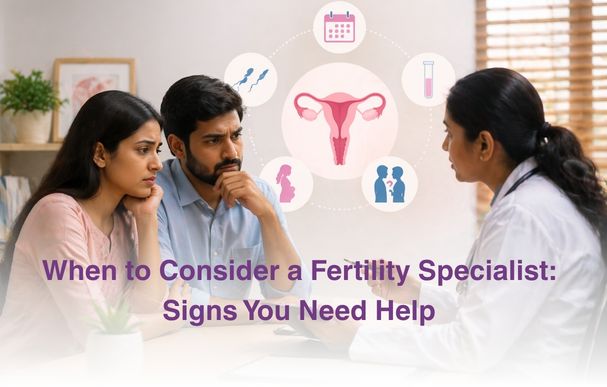
Introduction - Fertility, as we all know and understand, is the ability of an individual to be able to conceive- and this is never a one-sided process.Conception is a multi-step process, with no scope of error in each one- change, however subtle they may be, are not helpful at all in this scenario. At such times, it makes sense to talk to fertility specialists at the best fertility clinic in Hyderabad - especially if you have not been able to conceive even with unprotected sex for 6 months (over 35 years of age) or if you are younger and have been trying for over a year.
Though this is a general thumb rule, if you notice signs that point to irregular periods, erectile dysfunction or other issues, please call us at Feminova Clinics immediately, without any delay!
Who is a Fertility Specialist?
A fertility specialist is a doctor who is specifically trained to understand, evaluate, diagnose and treat conditions or disorders that impact fertility. So, they will check for regular ovulation and then decide on the course of action. You should consider talking to a specialist if you have time constraints, suffer from some condition which may hamper fertility in some way or if you begin noticing signs that point to infertility or related issues.
Signs You Need to Talk to a Fertility Specialist Right Away-
Age and Time constraints- For women more than men, the biological clock is not as forgiving- egg quality and fertility go hand in hand and when these cells do not get released on time or if their genetic material gets damaged, there are lower chances of conception happening. These are common issues you begin to notice once you cross your 30s. Don’t wait if you are 35-40 and above for a consultation.
So, talk to a doctor if-
- Your periods are highly irregular - longer than 35 days or if your cycle is shorter than 21 days long.
- If you miss periods often.
- If there is too much cramping and pain at that time of the month.
- If you notice marked changes to levels of bleeding- too little or too much along with changes to cervical mucus or discharge too.
If you have already gotten pregnant before, but it ended in a miscarriage, had an ectopic pregnancy, or a history of stillbirth and related complications while being pregnant- you should talk to a doctor without any delay.
Call a women clinic nearby if you suffer from chronic conditions like-
- PCOS
- Endometriosis
- Diabetes and hypertension, thyroid issues
- Uterine fibroids and polyps.
- You have a history of pelvic infections or STIs,
- You have had pelvic or abdominal surgery before.
- If you have or are being treated for cancer in the abdomen or pelvis and need chemotherapy or radiation therapy, among other treatments.
Men also benefit profusely by talking to a specialist when they have symptoms like-
- If you have erectile dysfunction or have issues with ejaculation.
- If you have had injuries to the testes and surgery for that.
- Usage of anabolic steroids.
- If you have had cancer before.
- If you have suffered from STIs before.
It is also really interesting and ironic to note that many couples or individuals do not really have problems with their body- they have issues with planning, they have hectic jobs, travel a lot or want to consider egg or sperm freezing, embryo cryopreservation etc. because they are not able to plan right away.
What Does A Fertility Specialist Do?
Once you talk to a doctor, they can ascertain what the delay is, what you can do over the next 3-5 months to get pregnant and if that does not work- to consider going for other options like IUI, IVF or ones which promise better outcomes, based on your individual preferences and health parameters. Most important- they help you get rid of uncertainty and come up with a plan.
Conclusion-
There is a very common misconception that talking to a fertility specialist means you will need to go in for IVF - most doctors recommend the least invasive methods initially- like treating underlying conditions, helping uterine factors get better, regularise cycles etc. Only when none of these work, do they suggest trying other modes of treatment.
Remember - whatever you decide, we at Feminova Clinics can help- especially if you have been searching for the best ‘Male Fertility Clinic Near Me’ or Obgyn Doctor Near Me online. Call us today!
Can't find an answer? Book a clinic visit or Call us at +91 9966888702 or +91 8125860069
When should you see a fertility specialist?
Consult a fertility specialist after 12 months of regular unprotected intercourse without conception. Seek evaluation after 6 months if the woman is over 35 years of age. Immediate consultation is required in cases of known reproductive conditions, irregular ovulation, or prior medical history affecting reproductive health.
What are common signs of fertility problems in women?
Irregular menstrual cycles, absent periods, and severe pelvic pain are key indicators of fertility problems. A history of recurrent miscarriage, diagnosed conditions such as polycystic ovary syndrome or endometriosis, and previous pelvic infections can also affect reproductive function and require assessment by a fertility specialist.
What are signs of male infertility?
Male infertility may present as low sperm count, poor sperm motility, or abnormal sperm morphology. Difficulty with erection or ejaculation, reduced facial or body hair, and a history of testicular injury, surgery, or infection are additional indicators that warrant evaluation by a fertility specialist.
Can previous medical conditions affect fertility?
Medical conditions such as polycystic ovary syndrome, endometriosis, diabetes, thyroid disorders, and sexually transmitted infections can interfere with reproductive function. These conditions may disrupt ovulation, hormone levels, or sperm production, making early diagnosis and management essential when trying to conceive.
Is age a factor in deciding to seek fertility help?
Age directly affects fertility, especially in women due to a decline in egg quantity and quality over time. Fertility declines after 35 years of age, increasing the risk of complications and reducing conception rates. Early consultation allows timely evaluation and access to appropriate fertility treatments if needed.